
The First Invoice of the Year Is Usually Wrong
January feels clean.
New budgets. Fresh starts. Reset expectations.
Unfortunately, your uniform and linen invoice didn’t get the memo.
In fact, the first invoice of the year is often the most likely to be wrong—and most companies approve it without a second look. January is busy. Budgets are being finalized. AP is clearing backlogs. The invoice looks familiar, so it slides through.
That’s exactly why it matters.
January is when pricing changes quietly appear.
Rates drift above contract.
“Temporary” charges stick around.
Locations get billed inconsistently.
Nothing looks dramatic. But once that first invoice is approved, it sets the tone for the rest of the year. Every mistake compounds.
The uniform and linen industry doesn’t rely on deception to win. It relies on inattention. Complex contracts, dense invoices, and turnover do the rest.
The companies that win in January draw a line early. They verify the first invoice against the contract and challenge issues before they become “normal.”
If this year is truly a reset, start with the invoice everyone ignores.
Why January Invoices Are High Risk
Uniform and linen vendors don’t randomly make changes. They time them.
January is ideal because:
-
Budgets just reset
-
Leadership attention is elsewhere
-
Prior-year comparisons feel less urgent
-
“Inflation” becomes a convenient excuse
We routinely see:
-
Rates rolled forward incorrectly
-
Temporary surcharges made permanent
-
Contracted pricing quietly ignored
-
Inventory quantities adjusted upward
-
Fees reintroduced that were previously removed
None of this requires malice. It only requires no one watching closely.
The Problem With “We Didn’t Change Anything”
That statement is meaningless.
Vendors don’t need your approval to create cost drift. They only need:
-
Invoice volume
-
Operational complexity
-
And time
A $0.10 increase per garment doesn’t trigger alarms. But across dozens of items, multiple locations, and 52 weeks, it becomes a budget leak you don’t notice until Q3.
What Smart Operators Do in January
The most disciplined operators treat January invoices as a checkpoint, not a formality.
They:
-
Compare January pricing to the actual contract, not last month’s bill
-
Validate inventory counts against usage
-
Confirm that any increases were formally approved
-
Reconcile credits before they disappear into the new year
Everyone else approves the invoice and moves on.
Final Thoughts
January isn’t when problems start.
It’s when existing problems get locked in for another year.
The first invoice you approve sets the baseline you’ll fight for the next 12 months.
If you don’t verify it, you’re agreeing to whatever showed up.
Before You Approve January’s Invoice, verify it
The first invoice you accept becomes the pricing baseline for the rest of the year.
If it’s wrong—and no one checks—it won’t fix itself.
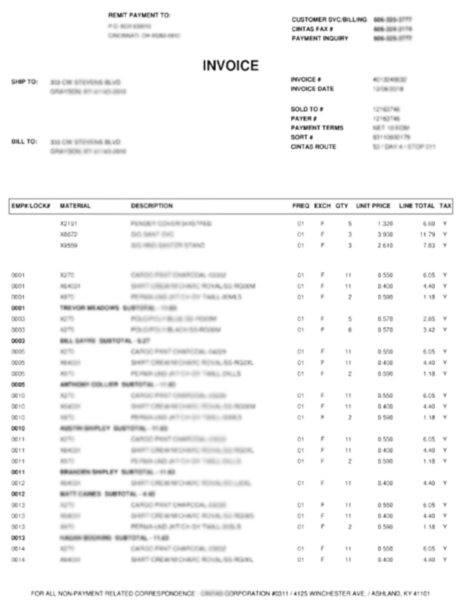
Send us a recent invoice. We’ll tell you, line by line, whether January pricing actually matches your contract.