
The Vendor Isn’t the Problem. Your Oversight Model Is
When companies overpay for uniforms and linens, the first instinct is to blame the vendor.
The service feels expensive. The invoices look inflated. The increases seem constant.
So the conclusion is easy: the vendor must be the problem.
That explanation is convenient.
It also lets everyone off the hook.
And more often than not, it’s wrong.
The Real Reason Costs Drift
Most uniform and linen programs are built on a flawed assumption:
“If service is fine, pricing must be fine.”
That assumption collapses under scrutiny.
Uniform and linen billing is:
-
Complex
-
High-volume
-
Contract-driven
-
Easy to manipulate without detection
And most companies oversee it with zero continuous controls.
What Vendors Rely On (Whether They Admit It or Not)
Vendors don’t need bad intent to win.
They rely on:
-
Invoices being approved in bulk
-
Contracts not being referenced after signing
-
Changes being accepted without documentation
-
Credits requiring the client to notice and request them
In other words: passive clients subsidize active ones.
Why “Annual Reviews” Fail
Many companies say:
“We review pricing once a year.”
That sounds responsible.
It isn’t.
By the time you review annually:
-
Hundreds of invoices are already paid
-
Errors are harder to unwind
-
Vendors have leverage
-
Drift has compounded
Annual reviews don’t prevent overbilling.
They document it after the fact.
Oversight Is a System, Not a Moment
-
Effective oversight means:
-
Every invoice checked against contract terms
-
Rate changes validated, not assumed
-
Line items tracked over time
-
Credits enforced, not hoped for
This is not a procurement task.
It’s not an AP task.
It’s not a once-a-year exercise.It’s a system.
And most companies don’t have one.
-
The Result of Getting This Right
When oversight is continuous:
-
Vendors behave differently
-
Pricing stabilizes
-
Errors surface early
-
Contracts regain meaning
That’s why companies with proper oversight often don’t change vendors — they change outcomes.
Final Thoughts
If your uniform or linen costs are rising, the vendor may not be the problem.
The lack of enforcement is.
And until that changes, overbilling isn’t a risk — it’s a certainty.
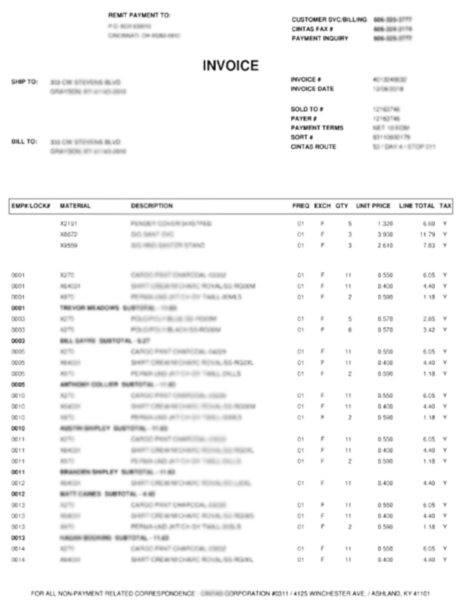
Oversight Beats Negotiation
If your uniform or linen invoices aren’t being actively enforced against contract terms, you’re paying more than you should. We build the oversight system that stops it — permanently.